
A Study of a Homeowner: An Allegory of Incremental Authority
The Parable
Imagine a homeowner who needs a maid and places an advertisement in the local newspaper. Many candidates respond, and after careful consideration, he selects what appears to be the perfect fit. They agree to reasonable terms, and the maid begins work the following Monday.
Initially, the arrangement proves satisfactory, and the homeowner is pleased with his decision. However, one day he arrives home to find a note on the kitchen table: “Please place your dirty dishes in the sink so that I can ensure they are properly cleaned.” The request seems reasonable, so he complies without objection.
A few days later, another note appears: “Please make sure your dirty clothes are in the hamper in the laundry room so that I can ensure your garments are properly laundered.” Again, the homeowner sees no harm in accommodating this modest request and adjusts his behavior accordingly.
These incremental requests continue for many months. Eventually, a full notepad of rules accumulates. Some directives are confusing or seemingly unnecessary, but the homeowner continues to follow them, reasoning that none are significant enough to warrant confrontation.
The Escalation
One day, the homeowner arrives to discover a stranger living in his home. The maid explains that this individual has been hired to ensure all rules are followed and to assist should the homeowner forget any requirements. This development seems excessive, but the maid has been performing her duties so well that the homeowner hesitates to disturb the arrangement. He acquiesces.
A few weeks pass, and the homeowner receives formal notice that violations of the established rules will now incur additional fees. This seems unreasonable, but to preserve the peace, he agrees and continues.
Within a year of the initial agreement, the homeowner returns to find not only the maid but several other individuals residing in his home—all ostensibly present to protect his property and ensure it remains clean and orderly. Though increasingly uncomfortable with the situation, he remains silent. The staff is performing admirably, and conflict seems undesirable.
The Reckoning
A few months later, the homeowner arrives to find his doors locked and a notice posted: he has allegedly failed to follow the rules properly and must pay additional fines before being granted re-entry to his own home. He recognizes this as unreasonable but ultimately decides the dispute is not worth the effort. He pays the fine and moves on.
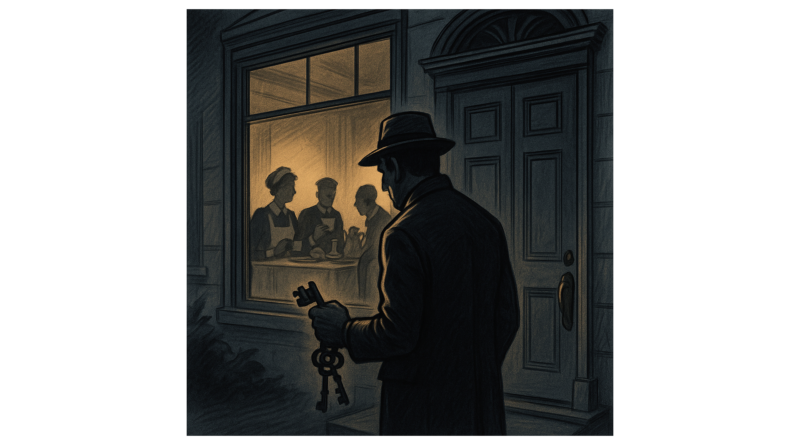
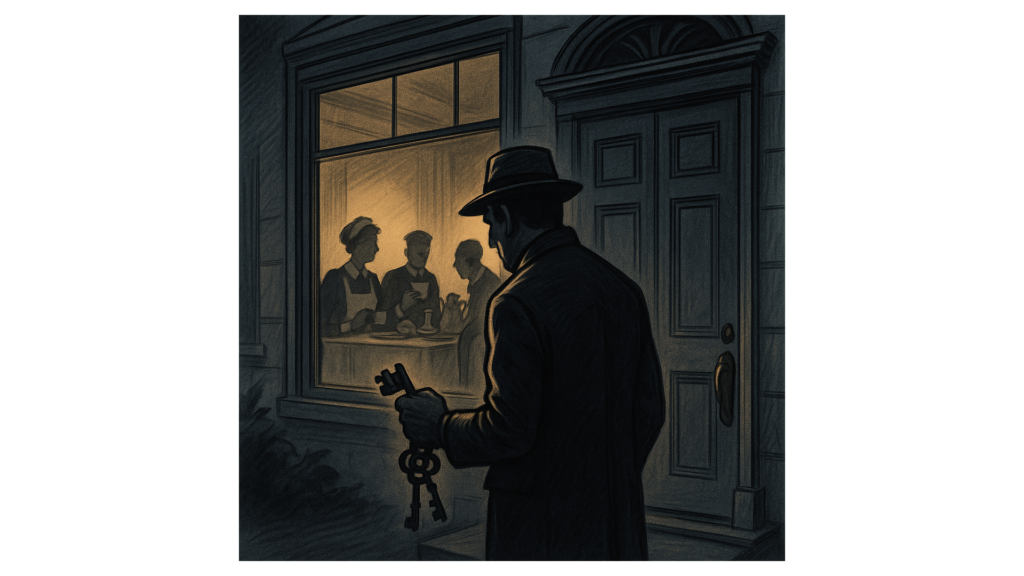
Then one day, after a long day of work, he returns to find himself locked out again—this time without any stated reason. He knocks and calls out, but receives no response. Peering through the windows, he observes a gathering inside his home: strangers using his belongings as if they were their own. He thinks to himself, “How did I arrive at this point?”
The Lesson
This parable illustrates a fundamental principle of liberty: **rights not defended at the moment of first encroachment become exponentially more difficult to reclaim later.** What begins as a reasonable accommodation of small requests can, through gradual accretion, transform into comprehensive subjugation.
The American people were given a rulebook—the Constitution—that explicitly limited the authority of those hired to serve the public interest. Yet through decades of incremental concessions, many of these limitations have been eroded or ignored entirely. The servants have grown powerful. They have, in effect, moved into the house.
The progression follows a predictable pattern:
1. Initial requests appear reasonable and are accepted without resistance
2. Small compliances accumulate into comprehensive behavioral requirements
3. Enforcement mechanisms are introduced gradually, each justified by the previous acceptance
4. Authority expands from service provider to rule-maker to enforcer
5. The original relationship inverts: the homeowner becomes subject to those he employed
This dynamic operates across countless domains of American governance: regulatory agencies that write their own enforcement rules, civil asset forfeiture laws that seize property without conviction, surveillance systems that monitor citizens without individualized suspicion, and administrative penalties imposed without meaningful due process.
Conclusion
The path back to constitutional governance requires the same vigilance that would have prevented the initial departure from it. Citizens must reassert their rights, demand adherence to the original compact, and resist the normalization of authority that exceeds constitutional limits—even when such resistance proves inconvenient or uncomfortable.
The alternative is permanent residence outside one’s own home, watching through windows as others decide how it shall be used.
”The Constitution is not an instrument for the government to restrain the people, it is an instrument for the people to restrain the government—lest it come to dominate our lives and interests.”
— Patrick Henry