
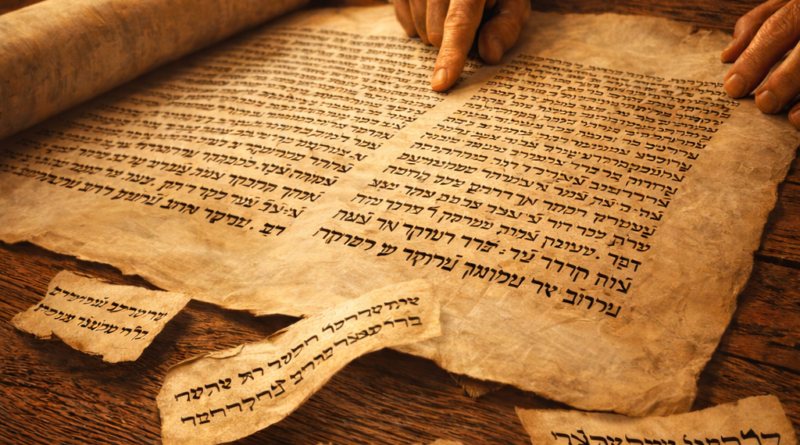
Why The Jews Were Right

Introduction
For two thousand years, Christians have asked: “Why didn’t the Jews recognize Jesus as the Messiah?” The question itself reveals a fundamental misunderstanding. The Jews didn’t “miss” their Messiah—they correctly identified that Jesus did not fulfill the messianic prophecies laid out in their scriptures.
Christian apologists claim that Jesus fulfilled hundreds of Old Testament prophecies. But when you examine these passages in their original Hebrew context, a different picture emerges: most weren’t prophecies at all, and the few genuine messianic prophecies remain unfulfilled to this day.
This article examines the most commonly cited “prophecies” and shows why the Jews were right to reject manipulated interpretations divorced from their historical and linguistic context.
How the Manipulation Was Possible
Before examining the specific passages, it’s crucial to understand how the Gospel writers convinced people that Jesus fulfilled prophecies when he clearly didn’t.
The answer: Nobody could fact-check them.
No Chapter and Verse Numbers
When Matthew wrote his Gospel (circa 70-90 CE) and quoted “prophecies,” there were no chapter and verse numbers: Chapters weren’t added until Archbishop Stephen Langton created them around 1227 CE (over 1,100 years later). Verse numbers for the Old Testament weren’t added until Rabbi Isaac Nathan created them in 1448 CE. Verse numbers for the New Testament weren’t added until Robert Estienne created them in 1551 CE.
This means Matthew didn’t write “as Isaiah 7:14 says” or “see Hosea 11:1.” He wrote things like:
- “The prophet said…”
- “To fulfill what was spoken by the prophet…”
- “As it is written in the prophets…”
Why This Mattered
Without chapter and verse numbers, readers couldn’t easily verify his claims. To fact-check Matthew’s quotation, you would need to:
- Have access to a scroll of that particular prophet (expensive and rare)
- Read Hebrew (most early Christians only knew Greek)
- Unroll the entire scroll and search through it to find the passage
- Understand the full context of what came before and after
Very few people could do any of this, let alone all of it.
The Result: Easy Manipulation
This structure made it incredibly easy for Matthew and other New Testament writers to:
- Quote snippets completely out of context (like Hosea 11:1 about the Exodus)
- Misapply passages that weren’t messianic prophecies (like Isaiah 7:14 about King Ahaz)
- Rely on mistranslations from the Greek Septuagint instead of the Hebrew original
- Count on their audience having no practical way to verify their claims
- Present historical narrative as if it were prophecy
Modern readers assume the Gospel writers were citing verifiable scripture the way we reference “John 3:16” today. But they were actually quoting from memory or scrolls with no indexing system, and their audience had no way to fact-check whether the quotes were accurate, in context, or even relevant.
The Jews who could read Hebrew and had access to synagogue scrolls could verify these claims, which is precisely why they rejected them.
The Ten Most Commonly Cited “Prophecies”
1. Isaiah 7:14 – The “Virgin Birth.”
The Christian Claim:
Christians cite Isaiah 7:14 as proof that the Messiah would be born of a virgin: “Therefore the Lord himself will give you a sign: The virgin will conceive and give birth to a son, and will call him Immanuel.”
The Actual Context:
This passage has nothing to do with a future messiah. It’s about King Ahaz of Judah facing invasion in 734 BCE during the Syro-Ephraimite War.
Isaiah tells Ahaz that a young woman (Hebrew: almah) will have a child, and before that child knows right from wrong, Ahaz’s enemies will be destroyed. This prophecy was fulfilled within a few years when Assyria defeated Syria and Israel.
The Problem:
- The Hebrew word almah means “young woman,” not virgin. The word for virgin is betulah.
- The context is explicitly about events in Ahaz’s time: “Before the boy knows enough to reject the wrong and choose the right, the land of the two kings you dread will be laid waste” (Isaiah 7:16).
- This was a sign for Ahaz in 734 BCE, not a prophecy about someone born 700 years later.
- The child’s name was Immanuel (”God is with us”), not Jesus. Jesus was never called Immanuel.
Why Jews Rejected It:
The mistranslation occurred in the Greek Septuagint, which rendered almah as *parthenos* (virgin). But reading the passage in Hebrew, in its historical context, it’s clearly about Isaiah’s time, not about a virgin birth centuries in the future.
2. Micah 5:2 – Born in Bethlehem
The Christian Claim:
“But you, Bethlehem Ephrathah, though you are small among the clans of Judah, out of you will come for me one who will be ruler over Israel, whose origins are from of old, from ancient times.”
The Actual Context:
Micah is writing during the Assyrian crisis (circa 701 BCE). He’s prophesying that a future ruler will come from Bethlehem—the ancestral home of King David—to restore Israel.
The Problem:
- This is indeed a messianic prophecy, but Jesus didn’t fulfill it. The prophecy says this ruler will bring peace: “He will stand and shepherd his flock in the strength of the LORD… And they will live securely, for then his greatness will reach to the ends of the earth. And he will be our peace” (Micah 5:4-5).
Jesus did not bring peace. He himself said, “Do not suppose that I have come to bring peace to the earth. I did not come to bring peace, but a sword” (Matthew 10:34).
- The ruler in Micah will deliver Israel from Assyria (Micah 5:6). Jesus did not deliver Israel from any oppressor.
- The Jews would “live securely” with their “greatness reaching the ends of the earth.” This clearly didn’t happen.
Why Jews Rejected It:
Christians claim the birthplace was fulfilled, but ignore that the prophecy’s substance—peace, security, deliverance—was not.
3. Psalm 22 – “Pierced Hands and Feet.”
The Christian Claim:
Psalm 22:16 is cited as predicting crucifixion: “Dogs surround me, a pack of villains encircles me; they pierce my hands and my feet.”
The Actual Context:
Psalm 22 is a prayer of King David during his own suffering. It’s not a prophecy—it’s a lament.
The Problem:
- The phrase “pierced my hands and my feet” is a mistranslation. The Hebrew text says ka’ari yadai v’raglai, which means “like a lion, my hands and my feet.”
- The Masoretic text (the authoritative Hebrew Bible) does not say “pierced.” This is a Christian interpolation to make it fit crucifixion.
- The psalm describes David’s enemies and his plea for deliverance. It’s poetry about David’s suffering, not a prophecy about someone else.
- Crucifixion didn’t exist in David’s time—it was invented by the Persians centuries later.
Why Jews Rejected It:
The Hebrew doesn’t support the Christian claim, and the passage is clearly David’s personal prayer, not a prophecy about a future messiah.
4. Hosea 11:1 – “Out of Egypt I Called My Son.”
The Christian Claim:
Christians cite Hosea 11:1 as predicting Jesus’ return from Egypt: “Out of Egypt I called my son.”
The Actual Context:
Hosea is explicitly referring to the Exodus, when God brought the nation of Israel out of Egyptian slavery.
The Full Text:
“When Israel was a child, I loved him, and out of Egypt I called my son. But the more they were called, the more they went away from me. They sacrificed to the Baals and they burned incense to images” (Hosea 11:1-2).
The Problem:
- Hosea is talking about the past—the Exodus that already happened.
- “My son” refers to the Israelites collectively—the descendants of Jacob—not an individual messiah. At the time of the Exodus (circa 1446 BCE or 1260 BCE), there was no “nation of Israel.” They were enslaved tribal family groups, the children of Jacob, who only became an organized nation AFTER leaving Egypt.
- The text itself reveals it was written long after these events. The author refers to “Israel” (Jacob’s later name) anachronistically, showing confusion about the time periods and even about whom God is addressing—the man Jacob/Israel or his descendants.
- This proves the text is a historical narrative written centuries later, not divine prophecy. The author is recounting what happened, with historical details already fuzzy and conflated.
- The passage immediately says that Israel went away from God and worshiped idols. This makes no sense if it’s about Jesus.
- Matthew rips this verse completely out of context to retroactively apply it to Jesus fleeing to Egypt as an infant.
Why Jews Rejected It:
This is perhaps the most egregious example of taking a verse out of context. It’s a straightforward historical narrative about the Exodus that already happened, written by an author centuries removed from the events. The confusion about time periods and terminology (calling them “Israel” before they were a nation, conflating Jacob the man with his descendants) proves this is human authorship reflecting on past events, not prophetic revelation about a future messiah.
5. Isaiah 53 – The Suffering Servant
The Christian Claim:
Christians claim Isaiah 53 describes Jesus’ suffering and crucifixion: “He was pierced for our transgressions, he was crushed for our iniquities.”
The Actual Context:
In Jewish interpretation, the “suffering servant” is the nation of Israel, which has endured persecution and suffering throughout history.
The Evidence:
- Isaiah explicitly identifies the servant as Israel: “But you, Israel, my servant, Jacob, whom I have chosen” (Isaiah 41:8); “You are my servant, Israel, in whom I will display my splendor” (Isaiah 49:3).
- The passage describes Israel’s suffering among the nations, their persecution, and their eventual vindication.
- The servant is described in plural in the Hebrew in several places, indicating a collective, not an individual.
The Problem with the Christian Interpretation:
- The passage says the servant will “see his offspring and prolong his days” (Isaiah 53:10). Jesus died without children and did not prolong his days.
- The servant is said to make intercession for transgressors (Isaiah 53:12). The nation of Israel has historically interceded for others.
If this is about Jesus, why does Isaiah elsewhere explicitly call the servant “Israel”?
Why Jews Rejected It:
The Jewish people have historically read this as describing their own national suffering and persecution, which makes perfect sense in context with the rest of Isaiah.
6. Zechariah 9:9 – Riding on a Donkey
The Christian Claim:
“Rejoice greatly, Daughter Zion! Shout, Daughter Jerusalem! See, your king comes to you, righteous and victorious, lowly and riding on a donkey, on a colt, the foal of a donkey.”
The Actual Context:
This is indeed a messianic prophecy, but Jesus only fulfilled the easy part—riding a donkey. He failed to fulfill the substance.
What the Prophecy Actually Says Will Happen:
- “He will proclaim peace to the nations. His rule will extend from sea to sea and from the River to the ends of the earth” (Zechariah 9:10).
- “I will take away the chariots from Ephraim and the warhorses from Jerusalem, and the battle bow will be broken” (Zechariah 9:10).
The Problem:
- Jesus did not proclaim peace to the nations. Wars continued and intensified.
- His rule did not extend “from sea to sea.” The Roman Empire continued to rule.
- Chariots and warhorses were not removed. Weapons were not broken.
- In fact, some of history’s bloodiest wars have been waged in Jesus’ name.
Why Jews Rejected It:
Anyone can ride a donkey. The messianic prophecy is about what the messiah will accomplish—world peace, the end of warfare, universal recognition of God. Jesus accomplished none of this.
7. Jeremiah 31:15 – Rachel Weeping for Her Children
The Christian Claim:
Matthew claims this verse predicted Herod’s slaughter of infants: “A voice is heard in Ramah, mourning and great weeping, Rachel weeping for her children and refusing to be comforted, because they are no more.”
The Actual Context:
Jeremiah is writing about the Babylonian exile in 586 BCE. Rachel, the matriarch of Israel, is depicted as weeping for her descendants being taken into captivity.
The Full Context:
“This is what the LORD says: ‘Restrain your voice from weeping and your eyes from tears, for your work will be rewarded,’ declares the LORD. ‘They will return from the land of the enemy. So there is hope for your descendants,’ declares the LORD. ‘Your children will return to their own land’” (Jeremiah 31:16-17).
The Problem:
- This is about the Babylonian exile and the promise that the exiles will return, which they did.
- It’s not a prophecy about future events. It’s a promise of consolation for a specific historical tragedy.
- The context is about return and hope, not about babies being killed by Herod.
- Matthew takes one verse completely out of context to force-fit it to Jesus’ story.
Why Jews Rejected It:
Jeremiah is clearly writing about the exile to Babylon. The comfort God offers is that the people will return. This has nothing to do with Herod.
8. Psalm 110:1 – Sitting at God’s Right Hand
The Christian Claim:
“The LORD says to my lord: ‘Sit at my right hand until I make your enemies a footstool for your feet.’”
The Actual Context:
This is a royal psalm written about or for King David, celebrating his enthronement and God’s promise to make his enemies submit.
The Problem:
- This is coronation poetry for an Israelite king, not a prophecy about a future messiah.
- The psalm describes a king who will “rule in the midst of your enemies” and “strike down kings on the day of his wrath” (Psalm 110:2, 5). Jesus did not rule or strike down kings.
- In Jewish understanding, this refers to David or to the ultimate Davidic king who will bring peace.
- Christians claim Jesus is sitting at God’s right hand, but the prophecy says the king will actively rule and conquer enemies, which Jesus hasn’t done.
Why Jews Rejected It:
This is royal poetry, not messianic prophecy. And even if it were messianic, the messiah was supposed to visibly rule and defeat enemies, not sit invisibly in heaven for 2,000 years.
9. Daniel 9:24-27 – The “Seventy Weeks”
The Christian Claim:
Christians claim Daniel’s prophecy of “seventy weeks” predicts the exact timing of Jesus’ ministry and death.
The Actual Context:
Daniel 9 is notoriously complex and has been interpreted in many different ways, even among Christians. The passage speaks of “seventy sevens” (or “weeks”) decreed to “finish transgression, to put an end to sin, to atone for wickedness, to bring in everlasting righteousness, to seal up vision and prophecy, and to anoint the Most Holy Place.”
The Problems:
- The timeline doesn’t work. Christians manipulate the dating of decrees and use different calendar systems to make it fit, but there’s no consensus even among Christian scholars.
- The prophecy says that after sixty-two weeks, “the Anointed One will be put to death and will have nothing. The people of the ruler who will come will destroy the city and the sanctuary” (Daniel 9:26). This likely refers to the destruction of Jerusalem by the Romans in 70 CE, but that happened after Jesus, not because of him.
- Most importantly, the prophecy says this period will “finish transgression, put an end to sin, bring in everlasting righteousness.” Did this happen? Sin didn’t end. Transgression didn’t finish. Everlasting righteousness didn’t arrive.
Why Jews Rejected It:
The substance of the prophecy—ending sin and bringing everlasting righteousness—was not fulfilled. Christians focus on making the timeline fit while ignoring that the promised outcomes never materialized.
10. The Prophecies Jesus Did NOT Fulfill
Here are actual, unambiguous messianic prophecies that Jesus failed to fulfill:
Isaiah 2:4 – Universal peace and end of war:
“He will judge between the nations and will settle disputes for many peoples. They will beat their swords into plowshares and their spears into pruning hooks. Nation will not take up sword against nation, nor will they train for war anymore.”
Status: Not fulfilled. Wars continue. Nations still train for war.
Isaiah 11:11-12 – Ingathering of all Jewish exiles:
“In that day the Lord will reach out his hand a second time to reclaim the surviving remnant of his people… He will raise a banner for the nations and gather the exiles of Israel; he will assemble the scattered people of Judah from the four quarters of the earth.”
Status: Not fulfilled. Jewish people remained scattered for 2,000 years after Jesus.
Ezekiel 37:26-28 – Third Temple and God’s dwelling with Israel:
“I will make a covenant of peace with them; it will be an everlasting covenant… I will put my sanctuary among them forever. My dwelling place will be with them; I will be their God, and they will be my people.”
Status: Not fulfilled. The Second Temple was destroyed in 70 CE. No Third Temple has been built. God’s visible dwelling is not among the people.
Jeremiah 31:33-34 – Universal knowledge of God:
“No longer will they teach their neighbor, or say to one another, ‘Know the LORD,’ because they will all know me, from the least of them to the greatest.”
Status: Not fulfilled. Billions of people don’t know the LORD. Teaching about God is still necessary.
Micah 4:1-3 – All nations flowing to Jerusalem to learn God’s law:
“Many nations will come and say, ‘Come, let us go up to the mountain of the LORD, to the temple of the God of Jacob. He will teach us his ways, so that we may walk in his paths.’ The law will go out from Zion, the word of the LORD from Jerusalem.”
Status: Not fulfilled. Most nations do not look to Jerusalem for God’s law.
Conclusion
The Jews didn’t miss their Messiah. They correctly recognized that Jesus did not fulfill the messianic prophecies.
Christians respond by inventing the doctrine of the “Second Coming”—claiming that Jesus will fulfill these prophecies when he returns. But this is an admission that he didn’t fulfill them the first time. The Old Testament never speaks of a messiah who would come, fail to accomplish his mission, die, and then return thousands of years later to finish the job.
The messianic prophecies are clear:
- The messiah will bring world peace
- The messiah will gather all Jewish exiles to Israel
- The messiah will rebuild the Temple
- The messiah will bring universal knowledge of God
- All nations will turn to the God of Israel
None of this happened.
Christians reinterpret prophecies that weren’t about the messiah (Isaiah 7:14, Hosea 11:1, Jeremiah 31:15) and ignore the prophecies that actually matter (world peace, rebuilt Temple, ingathering of exiles).
The Jews were right to reject manipulated translations, verses torn from context, and claims unsupported by their scriptures read in their original language and historical setting.
The question is not “Why didn’t the Jews believe in Jesus?”
The question is: “Why did anyone think these manipulated prophecies were convincing in the first place?”
Further Reading
For those interested in exploring this topic in greater depth:
- The Jewish Annotated New Testament (Oxford University Press) – Shows how New Testament authors used and misused Jewish scriptures
- The Misunderstood Jew by Amy-Jill Levine – A Jewish scholar examines the historical Jesus
- A Rabbi Talks with Jesus by Jacob Neusner – Explores why Jews rejected Jesus’ teachings
- Kosher Jesus by Shmuley Boteach – Reclaims the historical Yeshua from Christian theology
The truth is found not in proof-texting isolated verses, but in reading the scriptures as the Jewish people have always read them—in context, in Hebrew, with attention to history and meaning. Even this approach has limitations, however, as the evidence suggests that these texts were not written when traditionally claimed to be, nor by the authors to whom they are attributed. The anachronisms and historical confusion we’ve seen in passages like Hosea 11:1 support this conclusion. And as I’ve argued elsewhere regarding Jewish ancestry and biblical authorship, no person called Jesus Christ ever fulfilled even a single genuine messianic prophecy.